

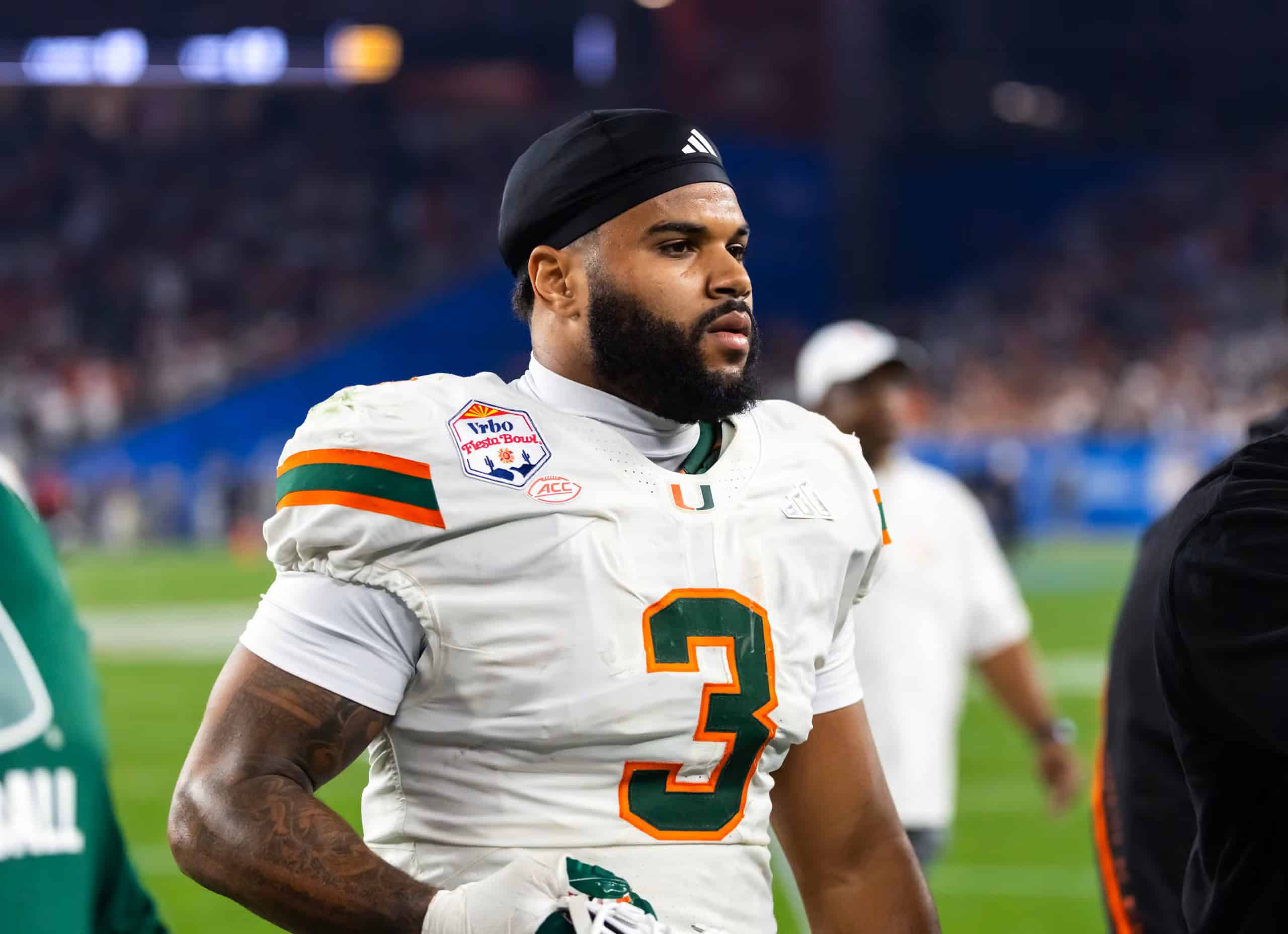
A defender like Akheem Mesidor puts up some real production on tape, shows he can get after the quarterback, and people immediately start selling the idea every concern should be pushed to the side. I don’t like this way of doing business.
I understand why it happens. Teams get desperate when players start coming off the board, they get antsy.
I just hope the Cowboys don’t fall into this trap so easily with Akheem Mesidor.
His production and experience deserve respect, but the experience is what scares me a little.
Once you start talking about draft value, especially first-round value, you cannot turn a blind eye to the one thing that could change the whole evaluation.
This isn’t a side note for me, it’s the center of the discussion.
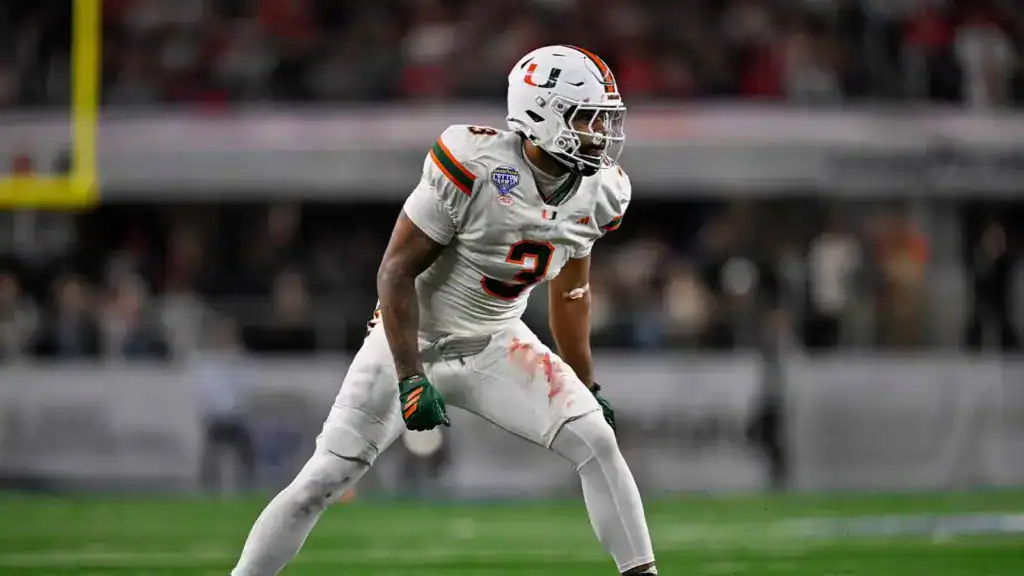
Akheem Mesidor’s Stats Show Real Production
Akheem Mesidor Season/Career Stats
Akheem Mesidor has enough production to make teams take him seriously, and that is why I think having this conversation is worth it in the first place. I don’t think anyone will question whether he can play.
He’s disruptive, active around the ball, and productive enough to draw attention, but production alone does not settle this issue.
It just gets you in the room.
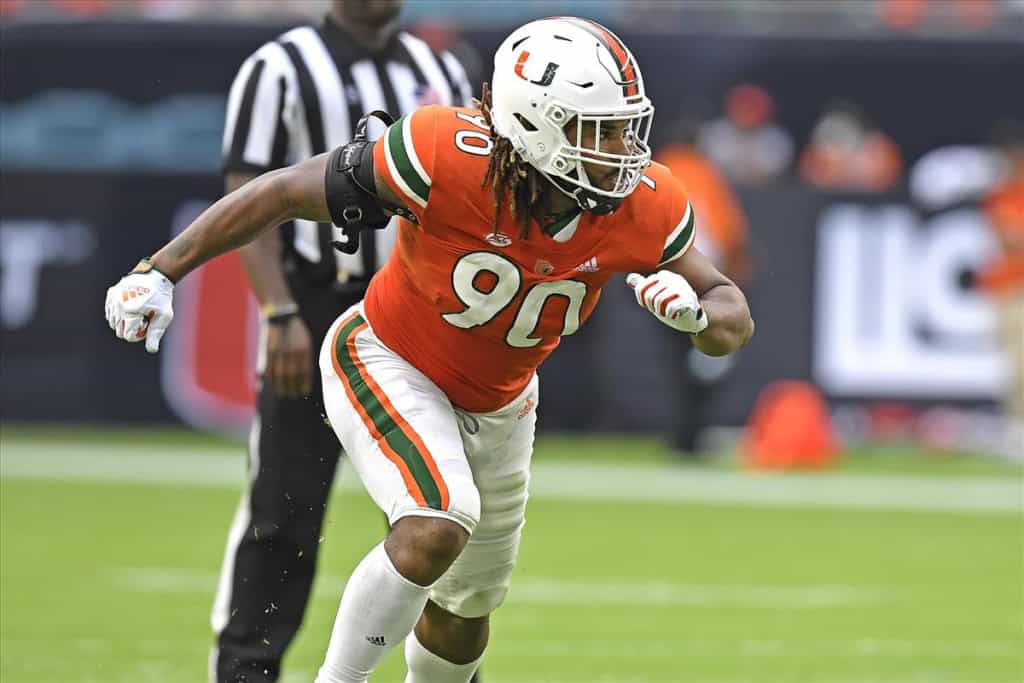
Age Changes How Teams Should View His Draft Value
When I see Akheem Mesidor, I’m not seeing a young prospect who still has years to grow into his frame, sharpen his technique, or slowly become the player teams hope he can be.
I see an old rookie who should be much closer to his final form. I think that changes the standard and the value.
If you’re 21 or 22, teams can talk themselves into traits, upside, and long-term development. They can picture what you might become after a couple of seasons in the NFL with better coaching, and time in an NFL strength program.
At 25, I’m not trying to hear a long speech about what you might become three years from now.
I think that’s the trade-off. Older prospects should come with more polish, maturity, and a clearer path to early snaps. If those things are not obvious, then age becomes a bigger issue because now you’re losing the development runway.
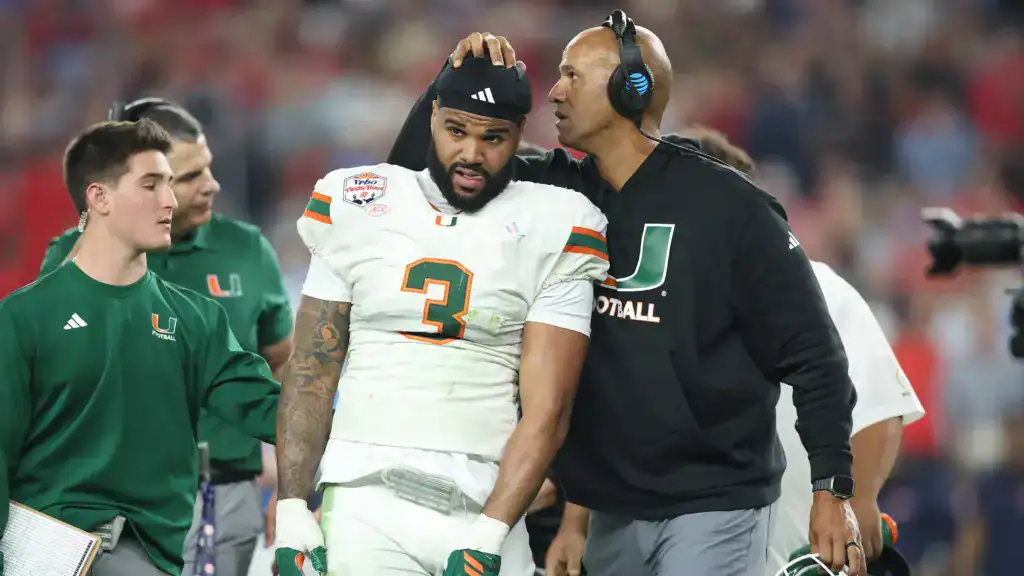
When A 25-Year-Old Rookie Creates a Contract Problem
I know this is where the conversation stops being theoretical and starts becoming a real roster-building issue.
If Mesidor is drafted in the first round, he would be 30 years old if the fifth-year option comes into play. If he was to hit the open market for the first time, he would be 31 years old.
That’s not normal.
The average age for a defensive end in the NFL to get a second contract is 25 years old.
Let’s say he was drafted outside the first round. He would still be a 29-year-old on his second contract.
That is better than the first-round timeline, but it still changes the equation. Instead of paying a player entering the sweet spot of his career, you are making decisions on someone already brushing against 30.
NFL teams aren’t only drafting players, but they are also drafting timelines. With Mesidor, that timeline is much shorter.
Day 2 Makes More Sense for Akheem Mesidor
Once you move him out of the first round, I think the conversation becomes much easier to have.
On Day 2, the risk feels more reasonable. In this area of the draft, you are betting on a more experienced player who should be able to help sooner, and the cost matches that idea a lot better.
It still doesn’t erase the age, but makes the age easier to live with. A second contract at 29 is still not ideal, but it’s much easier to swallow when the original investment was not a first-round pick.
This just makes sense in my head.
The Average Age of a Defensive End in the 2026 Draft
I feel like this is where the argument lands for me.
Akheem Mesidor is not just a little older than the rest of the edge group. He is a 25-year-old, soon-to-be rookie.
The other notable edge rushers in this class, like Keldric Faulk (20), T.J. Parker (21), R Mason Thomas (21), Zion Young (22), David Bailey (23), Cashius Howell (23), and Derrick Moore (23) average out to about 21.9 years old.
As you can see, that puts Akheem Mesidor at roughly three years older than the typical top edge prospect in the 2026 Draft.
In draft terms, that is a huge difference.
It changes how a team should view his upside, how patient they can afford to be, and how quickly he needs to produce.
The other edge prospects will still be discussed as players who can grow into a better player. Mesidor should already be there, extremely close, or very disappointing.
That’s why I can’t treat the age like a minor detail. In a class full of edge defenders hovering around 22, Mesidor at 25 is not just a footnote, it should be the entire value conversation.
Was this helpful?



6 Comments
Comments are closed.