


Back in 2010, the NFL made a major screw-up when they started trying to determine what a catch was. We know it to this day as the Calvin Johnson rule.
Here we are 15 years later and no one knows what is or isn’t a catch.
Because the ever-changing definition, which differs from game to game, makes even less sense than “a knee equals two feet” has for the last five decades.
In those 50 years, “a knee” has morphed into nearly any body part. And that too seems to change from game to game.
It has now reached the point that no one, and I do mean no one, can define what is a catch in the NFL in 2026.
We need only to look back only as far as this year’s divisional round games for proof.
Same Plays, Different Calls
In the Buffalo at Denver AFC Divisional round game, Brandin Cooks caught a Josh Allen pass that would have set the Bills up for a possible game-winning field goal.
He had possession of the ball as he hit the ground with the Broncos’ defender landing on him. Catch and down by contact, right?
Nope.
The officials ruled that as the players rolled over, the Broncos’ defender pulled the ball away from Cooks and ruled it an interception.
The very next day, Rams receiver Davante Adams catches a Matt Stafford pass over the middle. As he’s going to the ground, and his knee hits the ground, the ball is taken away by a Bears’ defender.
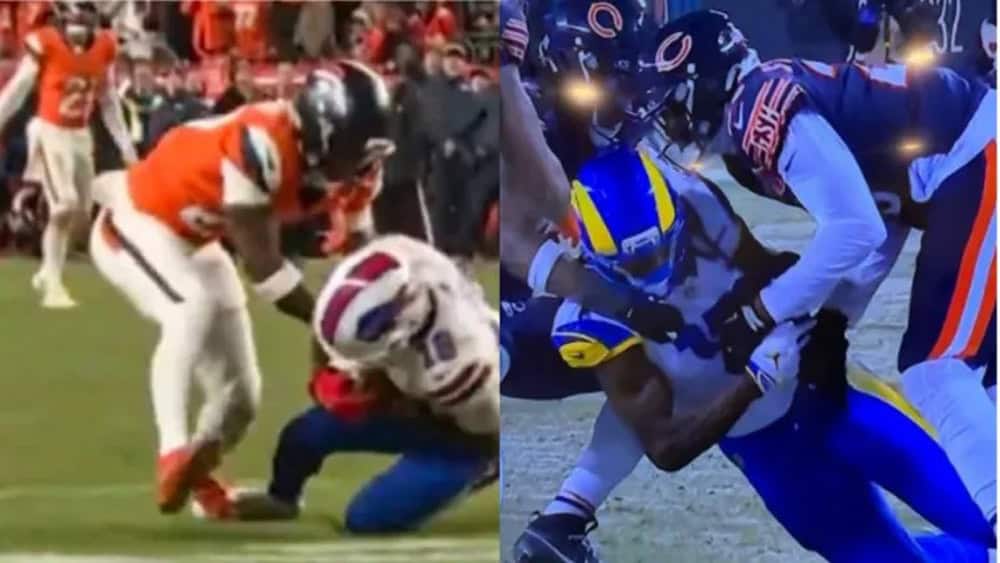
Interception or fumble recovery and the Bears’ ball, right?
Nope.
The officials ruled a catch by Adams and down by contact. Los Angeles retains possession.
Same play, two different rulings.
The NFL needs to remove the subjectivity from this play and there is a simple way to do it.
A receiver will be found to have caught the ball the instant he has two hands on the ball and both of his feet, or any body part, makes contact with the ground.
If he loses the ball after that, it is a fumble to be either recovered by the offense or the defense, or it goes out of bounds. If the ground cannot cause a fumble, then it should not be able to force an incomplete pass.
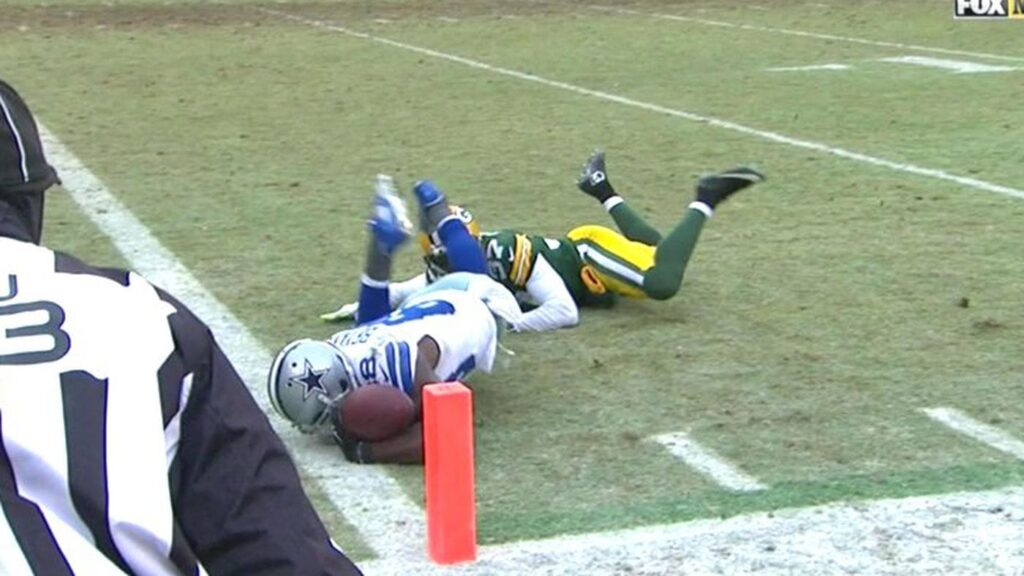
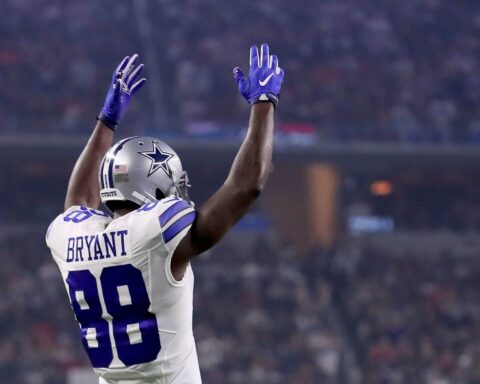
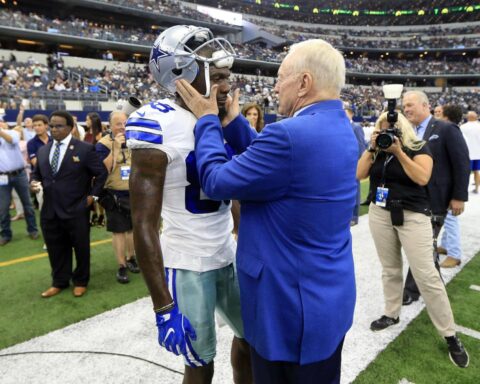
With this rule in place, Dez Bryant’s catch stands and Dallas likely heads to the Super Bowl instead of the Packers a few years back.
Then there is the issue of pass interference.
Inconsistency Abounds For PI Calls
How many times do we see it – as we did in the Bills-Broncos game – where the officials let defenders maul receivers all game and then get flag happy on the final drive?
Even in college football’s national title game, we say Miami’s defenders grabbing, holding, and interfering with Indiana’s receivers all game. I believe there was only one flag thrown out of what should have been a dozen.
The Bears tied the Rams on what should have been the final play of the game thanks to an uncalled offensive pass interference on Cole Kmet.
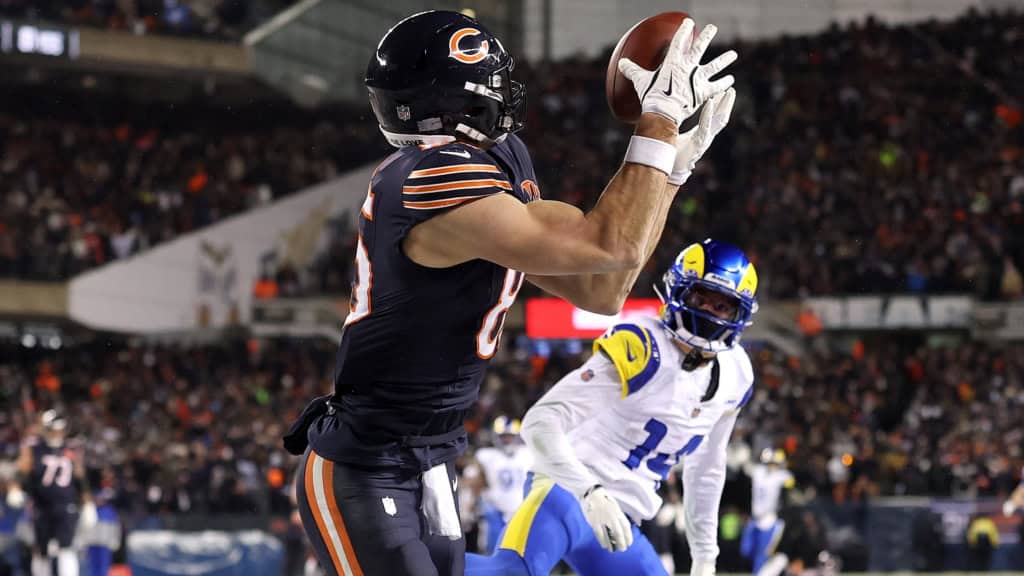
He clearly pushed the Rams’ defender away to give him a clear path to catch the ball.
Had the roles been reversed, and the defensive back done that to Kmet instead, what would have been the result? It would have been a flag parade in the endzone.
And rightly so.
The Fix
As with the “catch/no catch” situation, both the NFL and college football need to get their officials to simplify when, and when not, to throw a flag or rule on catches.
Even if it requires Replay Assist to buzz down and say the receiver had the ball in both hands and both feet were down to help the officials out.
Even if this process takes a few extra seconds. It would be so much better to get the calls right, and consistent, for the game overall.
Was this helpful?



2 Comments
Comments are closed.