

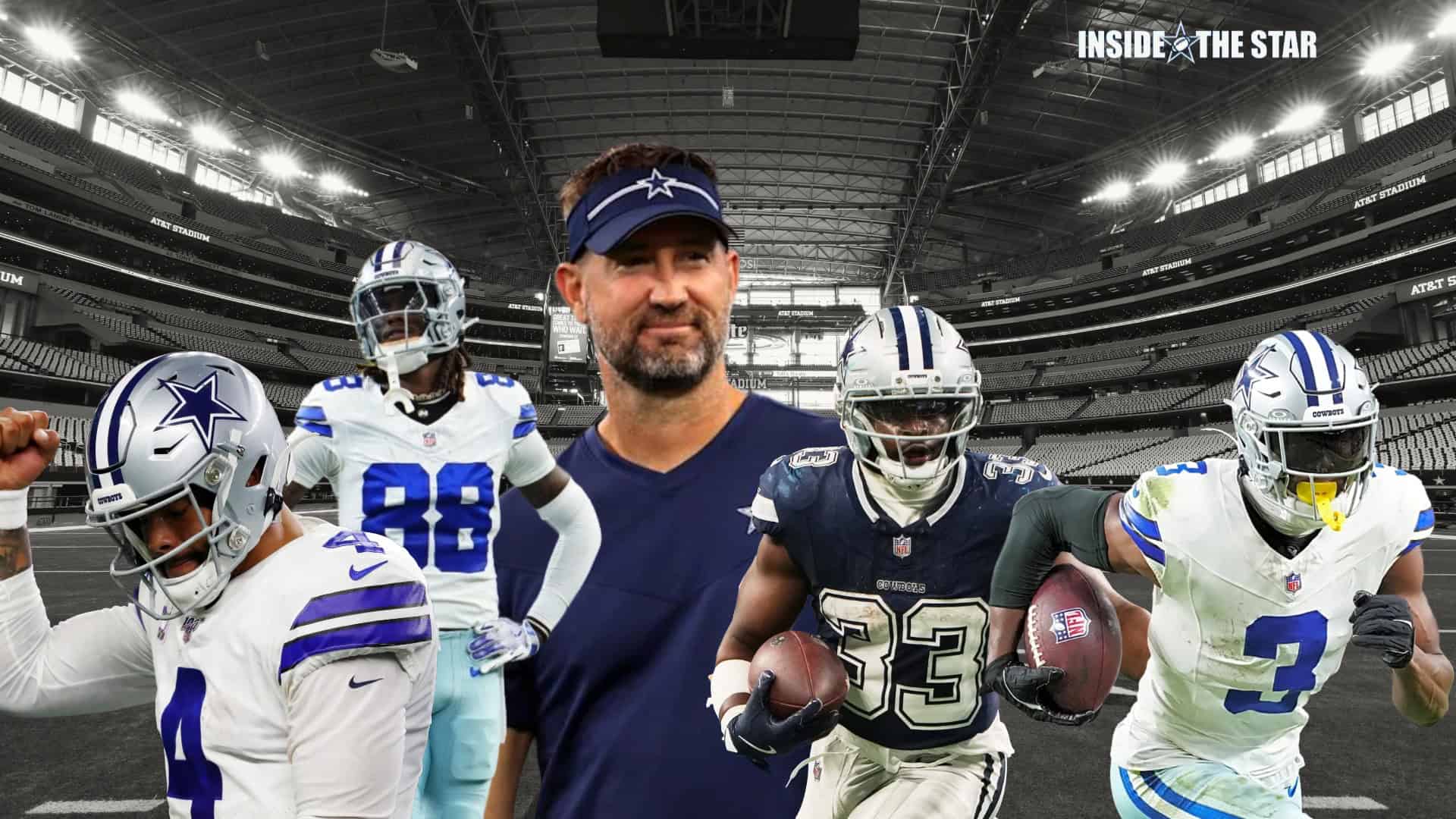
The Dallas Cowboys don’t need to hire a detective to figure out what went wrong last season. We all know the defense sunk the team.
That’s basically the whole story. Dallas has shown it can score with anyone. The problem is the Cowboys spent too much of last season asking the offense to win games twice—once against the opponent and once against its own defense.
That’s a hard way to survive in the NFL, but history says it is not a death sentence.
Since the 1970 AFL-NFL merger, only eight teams have finished a season with a top-three scoring offense and a bottom-three scoring defense. Those teams went a combined 73-47 the next season, good for a .608 winning percentage.
I feel like this matters because teams built like the Cowboys usually aren’t broken everywhere. They’re broken in obvious places.
Everybody could see where that was in Dallas.
The Offense Gives Dallas a Chance
A high-level NFL offense is hard to build. Some teams spend years looking for the right quarterback, play-caller, offensive line, and enough weapons to scare people.
When a team can score, it has a path. It might be narrow with some potholes, but it’s still a path.
The issue is that Dallas’ defense kept making the path harder than it had to be.
A bad defense changes the feel of every game. A 10-point lead does not feel safe, a punt feels like trouble, and a field goal feels like a loss. Every offensive drive starts carrying extra pressure because every fan knows the defense might give it right back.
That wears on a team and a fan base that can see the problem coming before the snap.
So when I look at Dallas through this historical lens, I do not see hopeless.
I see urgent.
History Says the Turnaround is Possible
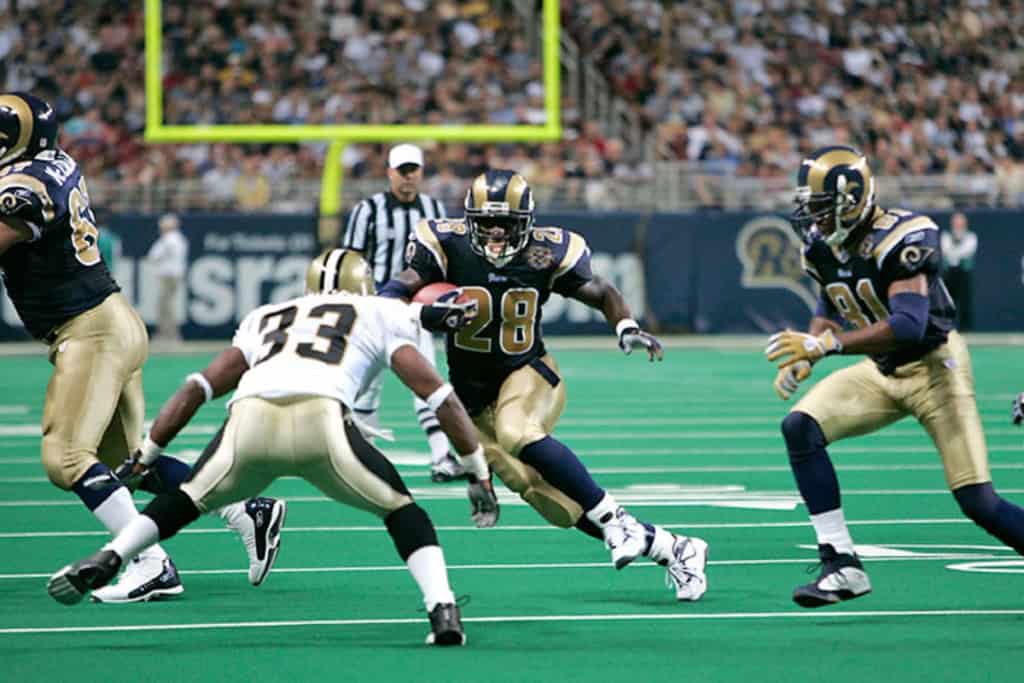
The best example is the 2000 St. Louis Rams.
If anyone remembers, that offense was loaded. Kurt Warner, Marshall Faulk, Isaac Bruce, and Torry Holt could light up a scoreboard in a hurry, but the defense made the whole operation unstable.
Then the Rams fixed enough of it.
They didn’t become a defense-first team, and they didn’t need to. They simply stopped being one of the worst defenses in football, and the next season they went 14-2 and reached the Super Bowl.
They changed defensive coordinators and made small changes.
I know that’s the model for Dallas.
I don’t feel like the Cowboys need to become a team that wins 13-10 every week. They just need a defense that stops forcing the offense to be perfect.
The New Orleans Saints proved the same point twice.
The 2012 Saints had a top-three scoring offense and a bottom-three scoring defense. They went 7-9 and the next year, they jumped to 11-5.
The 2016 Saints had the same type of deal. Top-three offense, bottom-three defense, and another 7-9 season. Then they fixed enough of the defense and went 11-5 in 2017.
That is opportunity sitting in front of Dallas.
I know the offense is already in place, defensive improvement does not have to be historic. It just has to be better.
The Cowboys Have Made Some Real Change
This is where this offseason has mattered.
Dallas did not just talk about changing the defense. The Cowboys started rebuilding it.
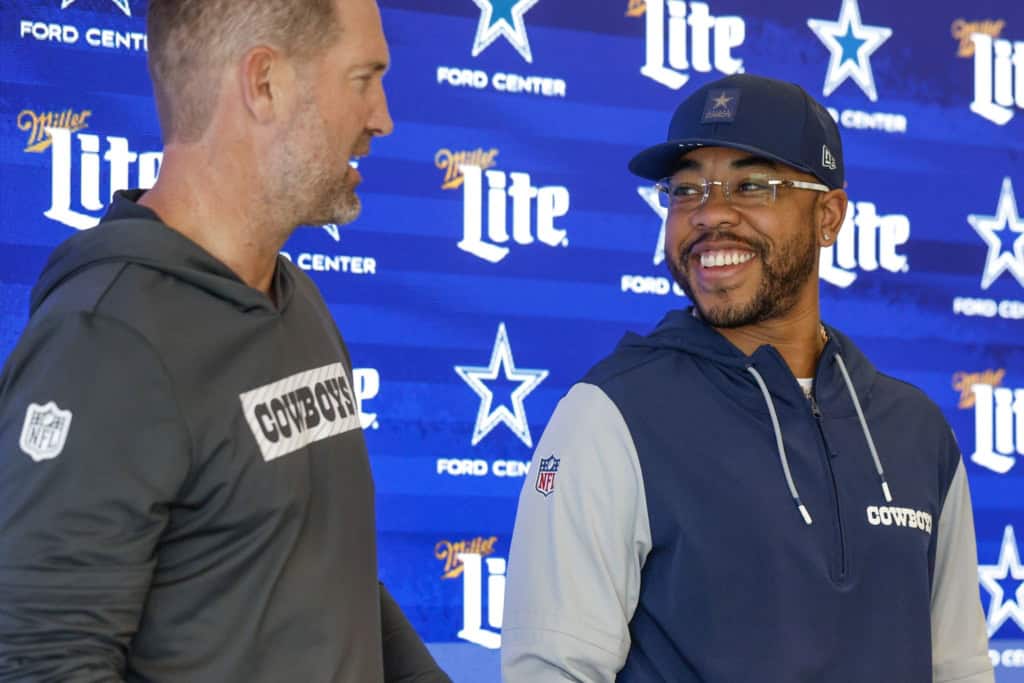
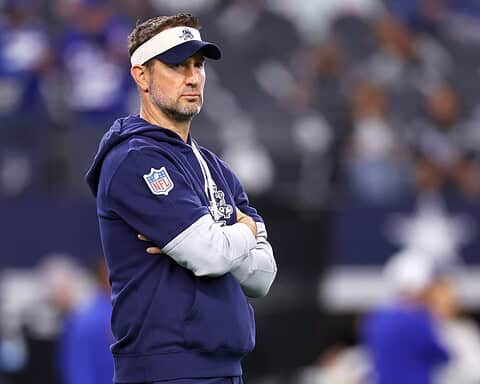
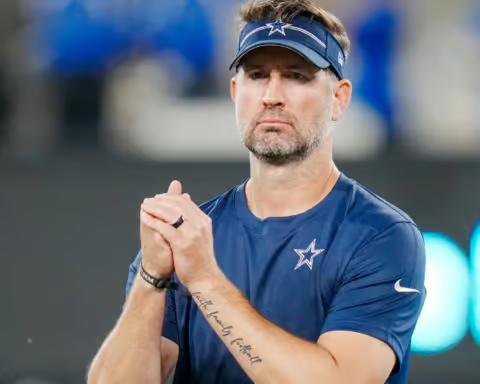
I feel like the biggest move of the offseason was hiring Christian Parker as the defensive coordinator. He became the youngest defensive coordinator in franchise history at 34 years old, and he arrived with NFL experience working with defensive backs.
This is not just a new name on the staff, it’s a shift in approach. Parker has talked about building the scheme around the players instead of forcing players into a system.
Along with Parker, if you remember, the Cowboys changed several defensive position coaches. The rebuild didn’t stop with the coordinator, Dallas made changes across the defensive staff, which tells me the organization knew this was bigger than one person.
Then came the roster work.
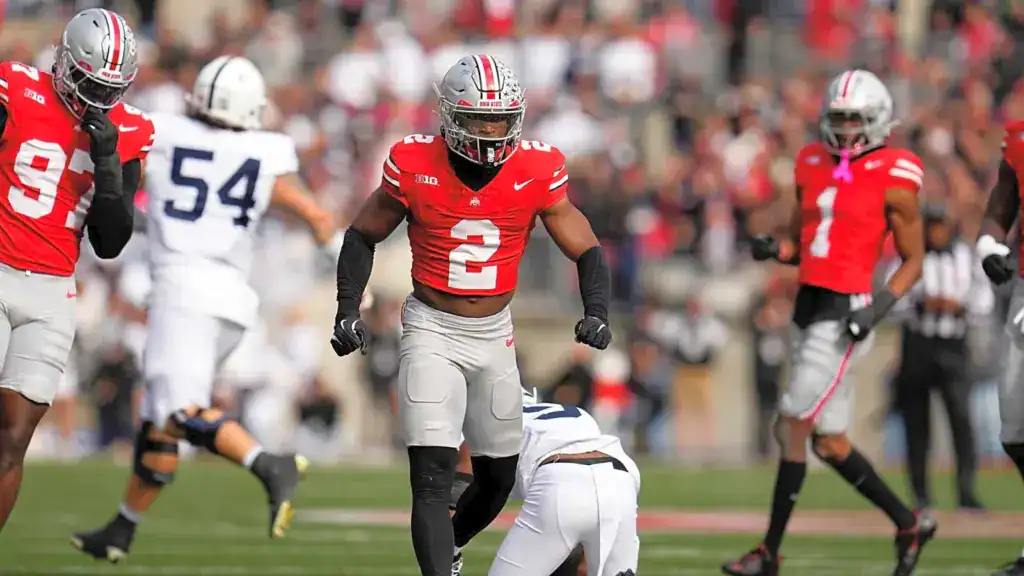
Dallas added veteran pass rusher Rashan Gary and brought in defensive backs Jalen Thompson, P.J. Locke, Cobie Durant, and Derion Kendrick as part of the effort to reshape the defense.
We also watched the Cowboys use major draft resources on that side of the ball, adding Caleb Downs, Malachi Lawrence, and Jaishawn Barham, while also trading for linebacker Dee Winters during the draft.
I don’t feel like this is a small tweak. This is a football team admitting the defense needed more than a fresh coat of paint.
Now the Moves Have to Work
Here is where I’m going to get carried away.
New names do not guarantee new results.
Cowboys fans know how this goes. Every offseason comes with hope, the new coach sounds sharp at the podium, every new defender gets talked up as a perfect fit. By August, everybody looks fast, and by September the truth shows up.
That’s why this cannot just be a better-looking depth chart.
Parker has to organize a defense that tackles better, communicates better, and gets off the field without making every third down feel like a coin flip.
This defense needs to stop being the reason good offensive days turn into losses.
The Bears Are the Warning
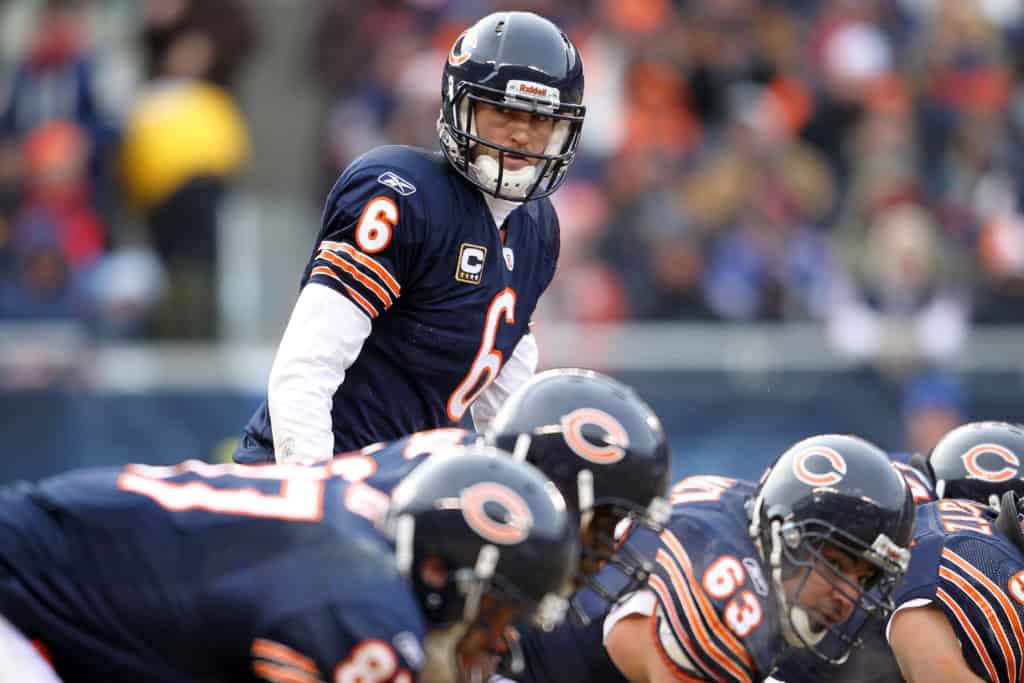
The warning in this historical group is the 2013 Chicago Bears.
They had the offense and could score. They looked like a team that should have been close.
Then they went 5-11 the next season.
We all know this is a possibility with the Cowboys. Because the Bears had the offensive answers, but never truly fixed the defense.
Bad defense does not disappear because the calendar flips. Missed tackles don’t go away because a new coach says the right things. Poor communication does not clean itself up.
It has to be fixed on purpose and I know that is where Dallas is right now.
The Cowboys have made serious changes, but the changes only matter if they show up on Sundays.
Where This Leaves Dallas
The Cowboys aren’t starting from scratch, and at least we have that encouraging part.
History says teams with elite scoring offenses and awful defenses can bounce back quickly. The Rams did it. The Saints did it twice. The combined next season record says this kind of team is not hopeless.
We also have to understand history says the opportunity can be wasted.
I like the direction the defensive overhaul is headed. The Cowboys have shown through their actions this offseason they understand the problem.
Now they have to prove they solved it.
Because if the defense climbs from bad to average, Dallas can become dangerous in a hurry.
If it doesn’t, the offense will spend another season dragging a busted wagon uphill, and around here, we know how that ends.
Eventually, the wheels come off.
Was this helpful?


1 Comment
Comments are closed.